Your cart
There are no more items in your cart


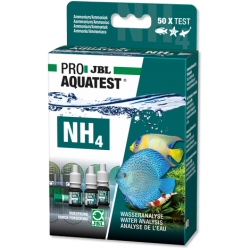

Available in stock
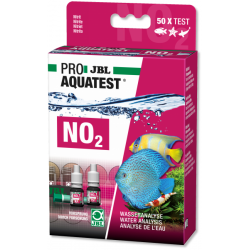
Available in stock
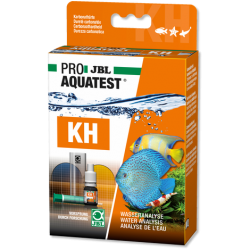
Available in stock
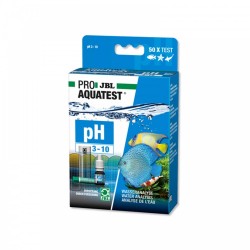
Available in stock

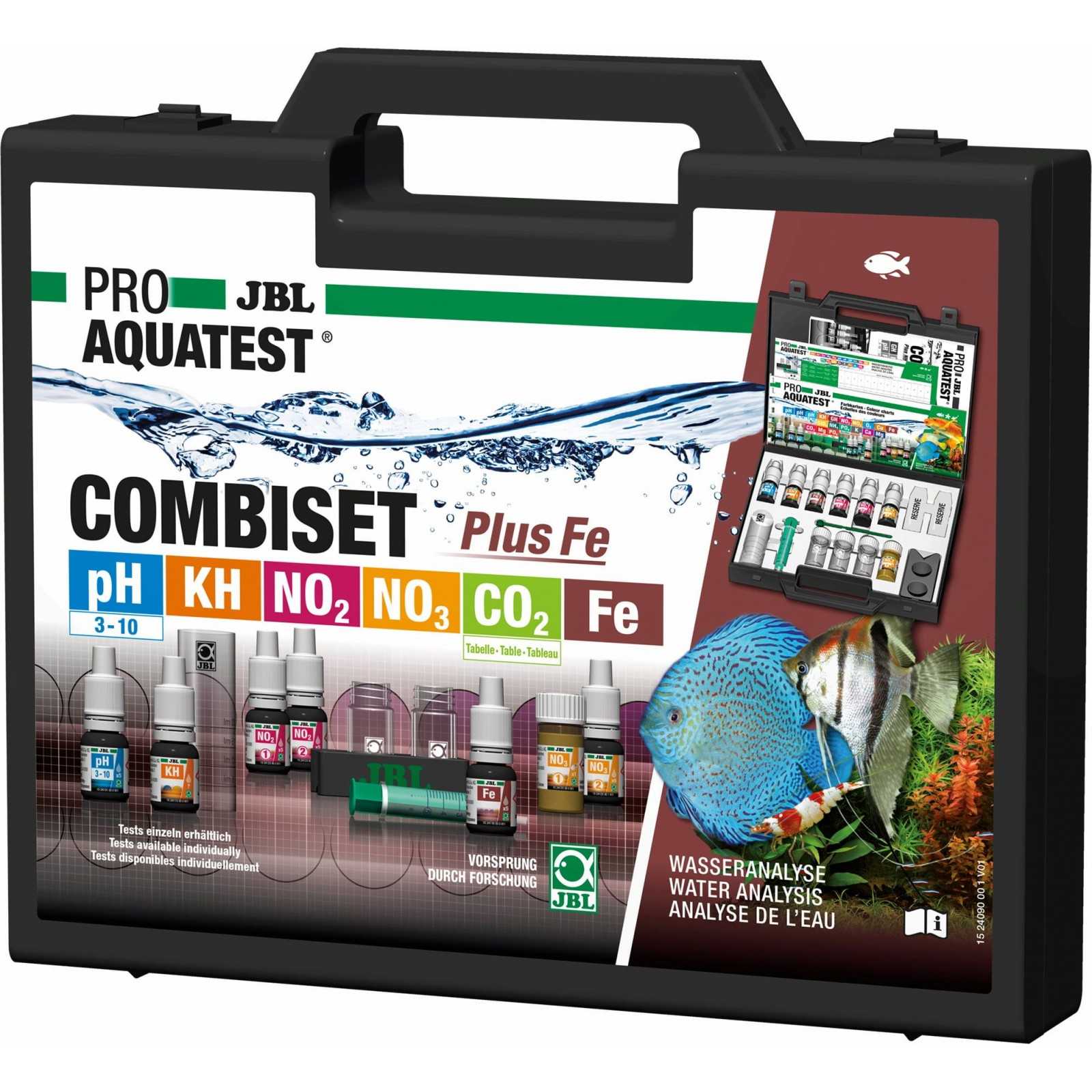
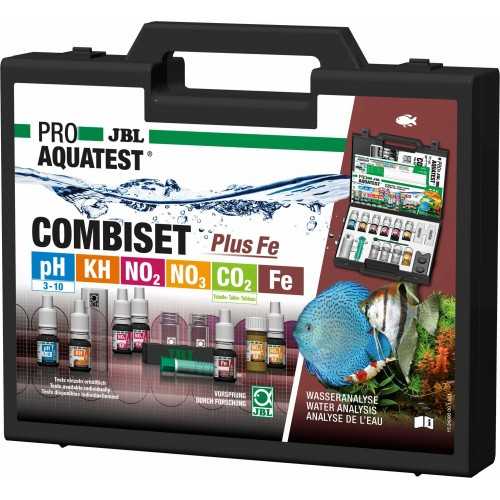
ProAquatest Combiset Plus FE case with water quality test
Features and properties
You might also like



JBL ProAquatest Combiset Plus FE is a briefcase with several tests to check the quality of the water. To be used for running water and water of freshwater aquariums.
Water is not simply water. Even rainwater absorbs pollutants and once infiltrated in the aquifers are enriched with other substances, not all suited to the aquarium. Constant monitoring of water values in the aquarium, especially during a new one, is the key to a successful aquarium. With JBL ProAquatest Combiset Plus FE You have the option to quickly and accurately determine the most important water values directly to your home. Thanks to the instructions for use very detailed supplied, with suggestions and advice, check the water parameters will be a child's play. In the briefcase you will find everything you need, including reagent bottles, glass test tubes, dosing syringe, colorimetric cards and protocol cards. Additional reagents can be purchased separately.
The following tests are included in the briefcase:
JBL Proaqua Test KH
Depending on where it comes from, water can contain different quantities of mineral salts, a fact that also depends on the type of terrain. A large part of loose salts is represented by hydrogenocarbonates of alkaline-earthy metals. Hydrogenocarbonates together with carbonates and carbon dioxide (CO2) an important buffer system that prevents high dangerous pH over changes in water. The carbonate hardness (KH) measured indicates the total concentration of hydrogenocarbonate in the water and can therefore, in the rare cases in which alkaline hydrogenocarbonates are present mainly as eg. In the lakes of eastern Africa, be higher than the total hardness that only respects the alkaline-territory salts. Most fish and freshwater plants in the aquarium can be successfully cure in the presence of a carbonate hardness of about 5-16 ° DH. For optimal fertilization with CO2 instead the carbonate hardness should not be found below 5th DH. Also in the garden pond it must be maintained a carbonate hardness of at least 5th DH. In the event of CO2 deficiency, aquatic plants, especially algae, consume with their fast hydrogen-like assimilation during photosynthesis (biogenic decalcification). With this they carry the pH to dangerous heights for fish (above 10). In sea water, to maintain the capacity of the buffer, the carbonate hardness must be about 7-13 ° DH.
JBL Proaqua test pH 3-10
Maintaining the correct pH value as constant as possible is an important prerequisite for the well-being of all the inhabitants of the aquarium. In particular, sudden fluctuations should be avoided. Furthermore, many dissolved substances in water are subject to variations dependent on the pH value. For example, the amount of CO2 which can be dissolved in the water is directly related to the pH value. The pH value can therefore serve as a simple control variable for adjusting the fertilization systems with CO2, provided that there are no other acids that influence the pH value (eg humic acids) in addition to CO2. The optimal CO2 concentration for plants and harmless for fish is reached at a pH value of about 6.8-7.3. Carbonate hardness must not be less than 4 ° DH. The optimal pH value to maintain most fish and freshwater plants is in the neutral range around 7. However, there are also freshwater fish that need slightly acid or alkaline water. For particularly precise measurements of the pH value, there is the JBL Pro Aquatest pH 6.0-7.6, for freshwater aquariums, which is adapted to the relevant pH ranges, and the JBL Pro Aquatest pH 7.4-9.0 For marine water aquariums and garden ponds. For marine organisms, optimal pH values are around 8.2. Especially in marine aquariums with invertebrates, the consumption of calcium bicarbonate can reduce the value of pH (and carbonate hardness). When taking care of fish from slightly alkaline fresh waters, eg. Lake Malawi or Lake Tanganica, pH values are recommended around 8-8.5. For KOI carps and other fish, the optimal pH values are between 7.5-8.5. In the garden pond, but above all in aquariums, in the event of CO2 deficiency, algae in particular can consume hydrogenocarbonate present in water through their rapid assimilation during photosynthesis (biogenic decalcification) and therefore bring the value of pH at levels such as they are dangerous for fish (over 10).
JBL Pro Aquatest NO2
Similar to ammonia, the nitrite is a powerful poison for fish. Depending on the sensitivity of fish species, concentrations between 0.5 and 1 mg / l (ppm) can already be deadly. Marine water fish and fry are more sensitive than adult fish.
JBL Pro Aquatest NO3
Normally ammonia and nitrite should not accumulate; If it happens, there may be a problem with bacterial balance. Continuously increased nitrates and a low or non-detectable ammonium and nitrite content at all are synonymous with a well-functioning bacterial balance, but at the same time indicates an insufficient balance between fish (source of nitrogen) and plants (consumers). Excessively high levels of nitrates promote unwanted algae growth if phosphate is available in the water in addition to the nitrite. The contents of nitrates must therefore not exceed 30 mg / l in fresh water and 20 mg / l in sea water. In aquariums with so many plants and few fish, the opposite can happen: nitrates become a lack of deficiency and must be reinstated so that prevenen plants.
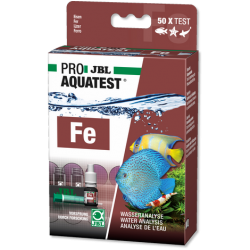
JBL Pro Aquatest Fe
Iron is an essential trace element for vegetable and animal bodies. In addition to adequate CO2 intake and other trace elements, iron is fundamental for good plant growth and is consumed continuously. Yellow shooter and younger leaves is a sign of iron deficiency. Iron and some other trace elements are stable in water only for a limited time, even if they are linked to so-called chelating, as is common in modern fertilizer preparations. Furthermore, running water is generally free of iron. Therefore, the iron content must be monitored regularly with this test and, if necessary, integrated. A concentration of 0.1-0.2 mg / l is sufficient for a good growth of plants. In aquariums with many plants, values can be reached up to 0.6 mg / l. In marine aquariums values up to 0.05 mg / l are recommended.
You might also like