Your cart
There are no more items in your cart


Available in stock

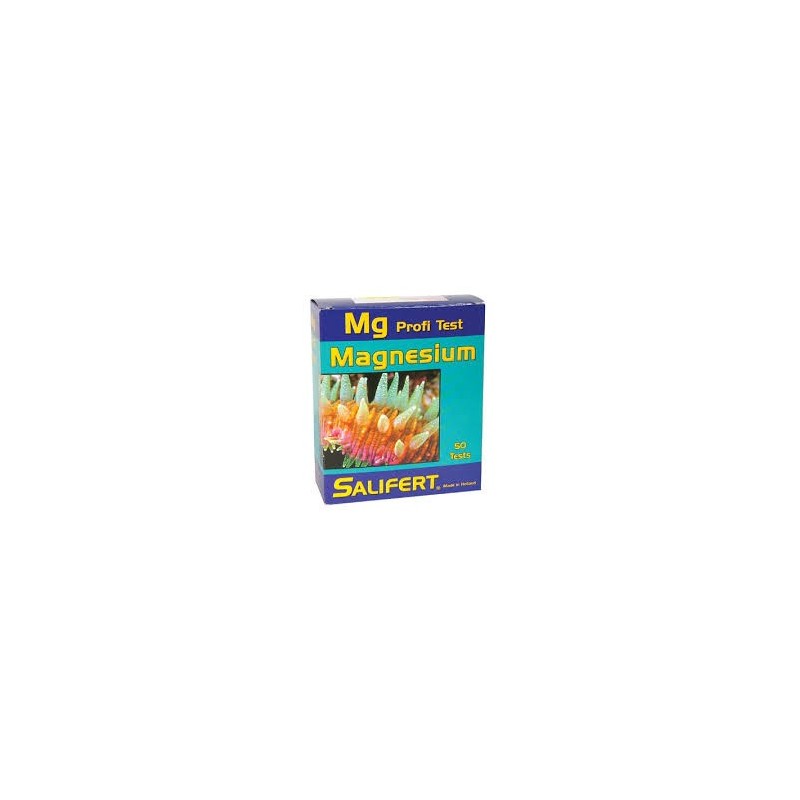
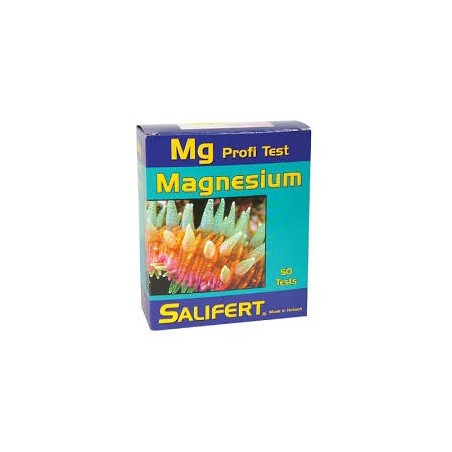
MG Profi Test Magnesium Salifert
A package is sufficient for about 50 measurements
Prices valid only for online sales

Salifert Profi Test Magnesium
Magnesium, in nature, is present in marine water in fairly high concentration (1300-1400 mg / l)
Magnesium is an essential part of chlorophyll, which is necessary for photosynthesis. Photosynthesis also algae and corals, which we keep in our tanks, could not survive. Magnesium has another very important function because it makes it possible to maintain a correct combination between the concentration of calcium and alkalinity (or carbonate hardness). Football, in fact, forms with carbonates and bicarbonates an insoluble compound called calcium carbonate. Football is a fundamental element for corals and limestone algae, but should derive from biological processes and be deposited in the right place. Therefore the formation of calcium carbonate through chemical processes should be avoided. Also in the absence of biological interference it could formalbed calcium and this could lower the concentration of calcium and alkalinity without fulfilling any positive function. In fact this process plunder many trace elements needed to health of the aquarium. Magnesium slows this negative process. The lower the concentration of magnesium, the faster pointing this negative phenomenon takes place. Maintaining a correct concentration of magnesium is extremely important and indirectly reflected on the growth of your corals (thanks to the possibility of maintaining the most possible calcium and alkalinity) magnesium is decreased by algae, excessive use of Kalkwasser e From leaving out of natural calcium, pH and alkalinity values. There are also some brands of salt that have a dramatically low magnesium content. Using them means incurring permanent problems with calcium concentration and alkalinity values.
Magnesium measurement assumes, in this perspective, a fundamental importance. Magnesium is an element whose role has been underestimated for too long. The magnesium content of many aquariums, when tested, is insufficient. The Salifert Magnesium test is extremely clear and does not suffer from football and strontium influences. Measure accurate intervals of 30 mg / l with a very precise colorimetric scale.
a) Take, with the appropriate syringe, 2 ml of water to be analyzed and place them in the transparent container.
b) add 4 drops of liquid mg-1 to the water, close the container with the blue cap and wake up gently for 30 seconds
c) Add a ranging teaspoon (the blue one) of MG-2 and tapped and shaken for 10 seconds
d) Fill the 1 ml syringe. With the mg-3 liquid.
Refer to the upper part of the black syringe ring, don't worry about the possible presence of air
e) Add to drop the MG-3 to the container until the color of the compound contained in it changes from gray to blue.
Remember to shake, at each drop, 1 or 2 seconds
f) Bridge the syringe with the tip upwards and read the level of MG-3 left at the black syringe ring.
e) Compare this value with those shown in the table and you will have the concentration of magnesium in the tank.