Your cart
There are no more items in your cart


Available in stock
CO2 systems, accessories and spare parts

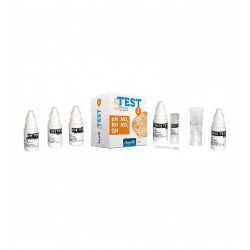
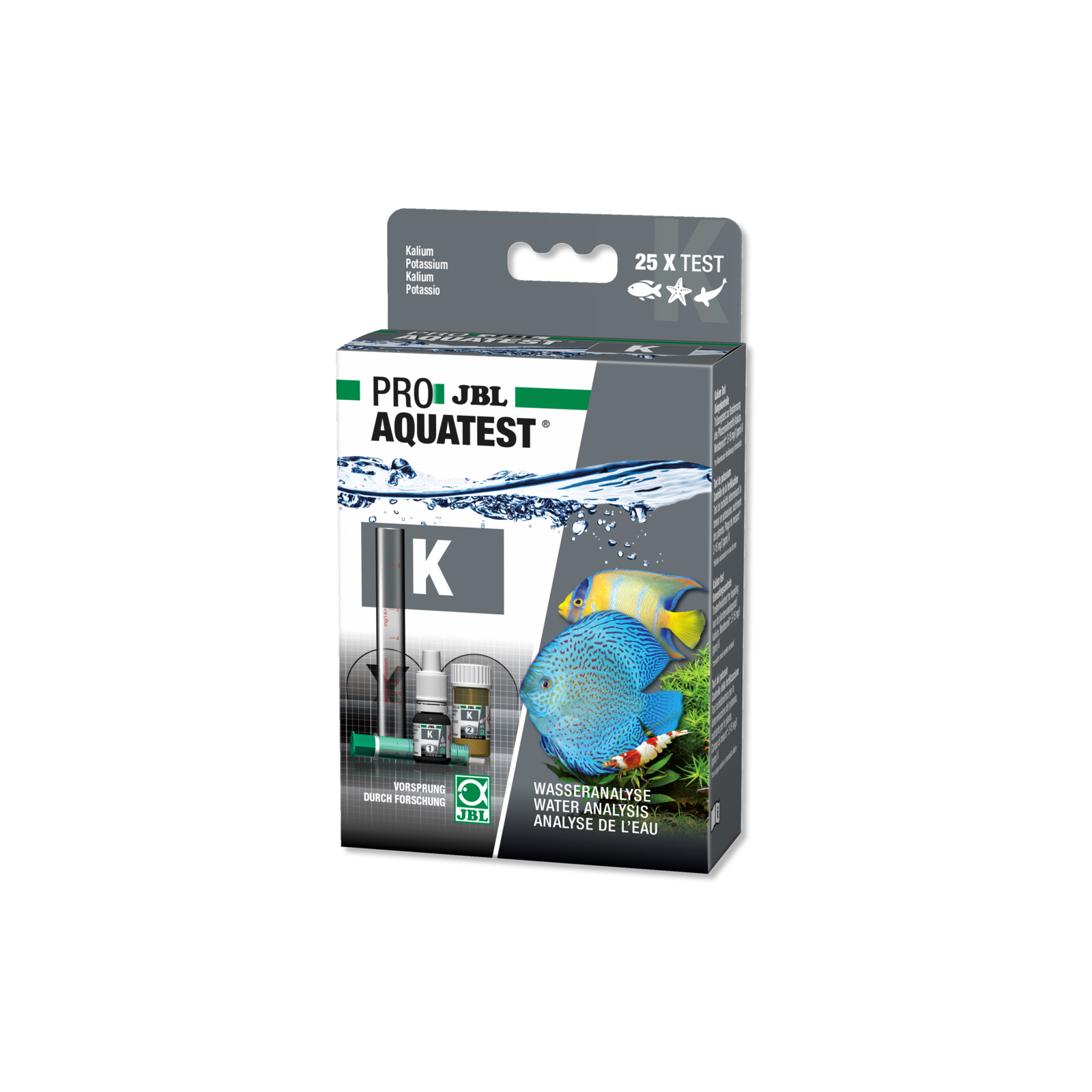
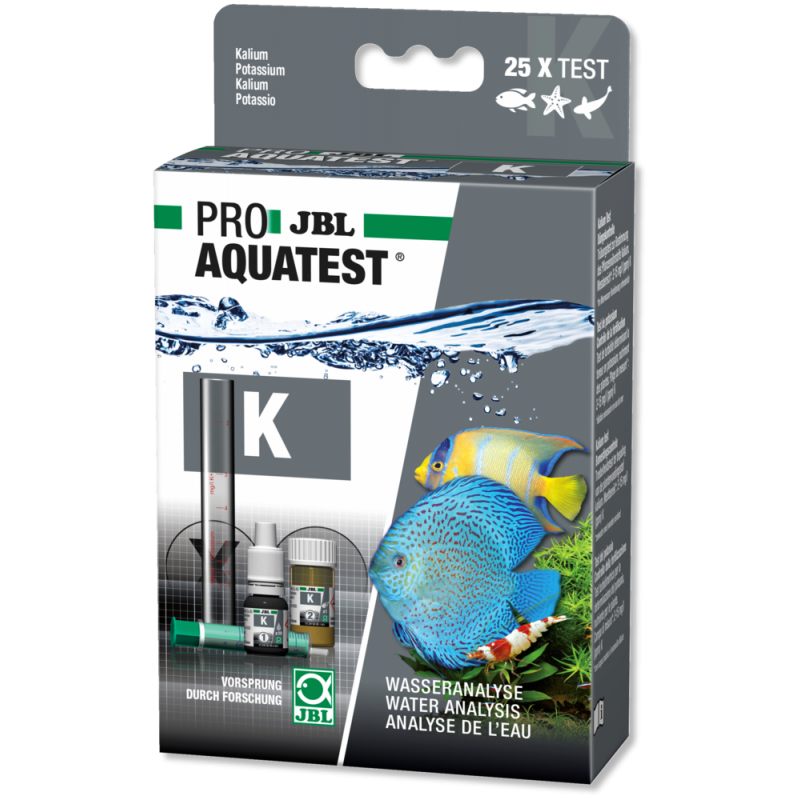
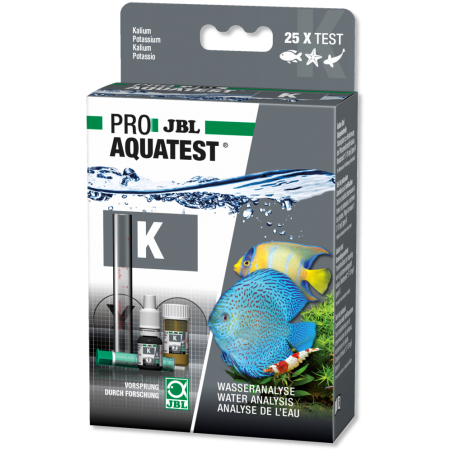
JBL Proaqua T test potassium is a quick test for the determination of potassium content in aquariums and ponds.
You might also like


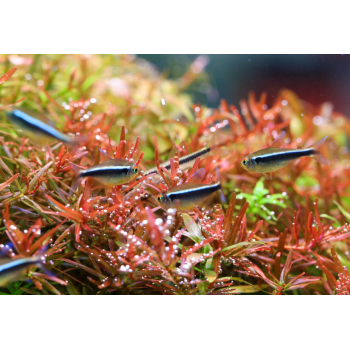
Potassium is one of the macroelements that plants in fresh water take effectively within a few hours. During growth, potassium requirement is greater than other elements. While fertilizing regularly, potassium can then get to a minimum and plants can stagnate in growth.
Potassium deficiency first makes the edges of chlorotic leaves, which then become necrotic. The leaves writh about or roll. In the central European faucet water, compared to natural biotopes, potassium is present in small quantities, especially in relation to the concentration of calcium and magnesium. For a good growth of plants, the concentration of potassium should be around 10 mg / l; In aquariums with a strong lighting (eg aquasciping style aquariums) we recommend quantities up to 30 mg / l. Higher values in the aquarium water favor the growth of threadbrorm green algae. In marine water, potassium is present in a concentration of about 380-400 ml / l, it is however consumed only in small quantities
A too high potassium content can become dangerous for sensitive animals like shrimp. At the beginning you should measure the potassium content of aquarium water daily. This allows to detect the plant requirement and to dose correspondly the fertilizer. Later you can make regular measurements in longer periods.
Recommended potassium levels
Fresh water aquarium: 10-30 mg / l
Tanganic Aquarium-Malawi: 10-30 mg / l
Vegetable aquariums with few fish: 10-30 mg / l
Marine water aquarium: potassium content cannot be measured with this test
You might also like