Your cart
There are no more items in your cart




AVAILABLE
Sponges, accessories, spare parts
Features:
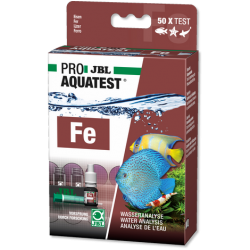
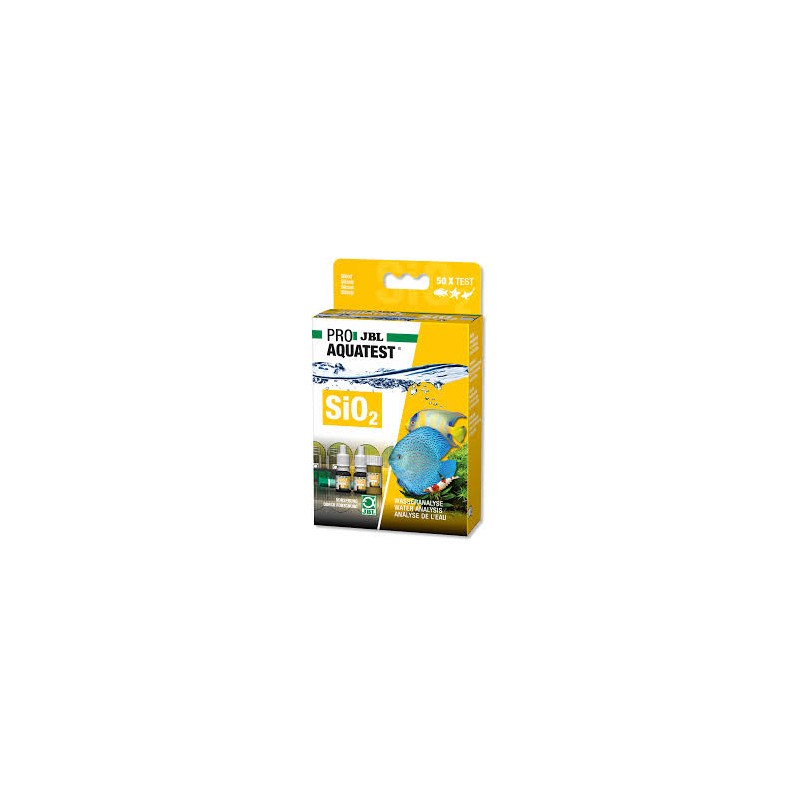
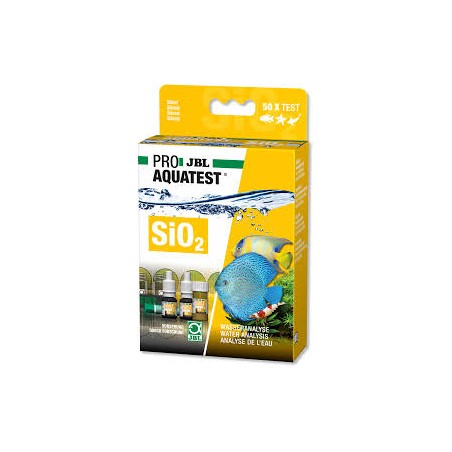
The set test JBL Siliketik-test-set SiO2 is used to measure and control regular periods the silicate content in freshwater and marine in the range from 0.2 to> 6 mg / i (ppm). Through a compensation method, specifically developed by JBL, there are exact and reliable results even in slightly colored aquarium waters, p.es. After filtration with peat or disease treatment. Any disturbances due to the presence of silicate in the water test tube are eliminated by adding the reagent 2 in deferred.
Why examine?
Silicon is one of the most popular elements on earth. In the disintegration of the rocks of flint the silicon, in the form of silicate, reaches the surface and in the aquifer. Consequently, the tap water contains, according to the type of land of the region, of the different quantities of dissolved silicate. In tap water you can find quantities up to 40 mg / i, rarely even more. Silicates are not poisonous and there are no limit values in drinking water legislation. Silicon is important in aquarium as it constitutes a nutrient for diathyheads, for some aquatic plants (p.es. Ceratophyllum demersum) As well as for silicospons and for some other invertebrates. In just set up aquariums, brunettes that cover plants and decorations represent the first settlement of diatoms.
These areas disappear when the aquarium is rotated and competition has been created by other algae and microorganisms. Then the quantity of silicate in the water is also considerably reduced. Often, on the other hand, these diatoms can reappear after a change of water due to the silicate added, especially in marine water. Therefore it is advisable to use osmosis water when adding or changing water into marine water aquariums.
We recommend the following values:
Fresh water: around 1 mg / i; Up to 2 mg / l still tolerable.
Marine water: 1 mg / i max.
Countermeasures to problems caused by a high quantity of silicate:
Control of silicate content in used water.
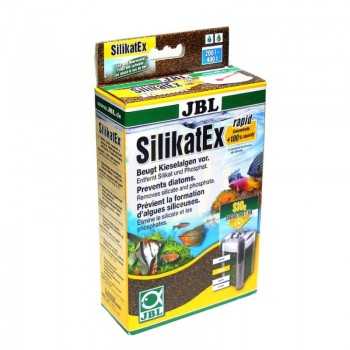
For a partial water change, use poor silicate water (reverse osmosis, p. Es. JBL Osmose 120).
Filtration through a resin that absorbs the silicate.
Instructions for use:
If in the measurement you get a darker color than that on the metric color scale, dilute the sample by adding distilled water or waters without silicate and repeat the measurement.
Depending on the dilution, the result is multiplied as follows to obtain the actual content of silicate:
On the back of the colorimetric scale there is an explanation with design for easy understanding.
Safety warnings regarding reagent 1:
In case of eye contact, wash immediately and abundantly with water and consult a doctor.
During work wearing gloves, mask and protective clothing.
In the event of an accident or malaise, consult a doctor immediately (if possible to show them these instructions).