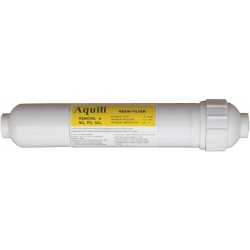
Features:
How to have a nice aquarium without the annoying algae
Diatomes form a brownish patina on plants, background and decoration in the aquarium. They form it when the water contains more than 0.4 mg / l of silicic acid (SiO2). Usually silicic acid arrives through tap water. This acid serves to the diatheometers for the formation of their skeleton. To fight it, it is sufficient to remove silicic acid to water: the diatoms die or even you can not even form.
Diatoms are not poisonous or harmful. In tanganic lakes and Malawi even constitute a part of the nutrient base for cichlids feeding on the Aufwuchs. The algae however can form brunettes that do not seem good to us and we want to eliminate.
Difference Diatoms / Patinose Algae
The two algae groups can resemble a lot. But when he takes him in his fingers he feels the difference: the patinose algae seem to look-patinose, while the diatoms are rough.
Special filtering
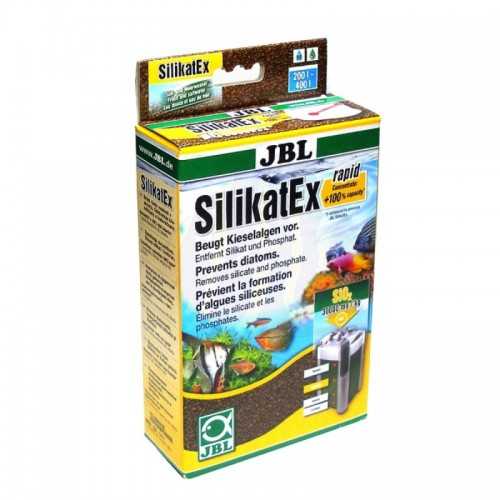
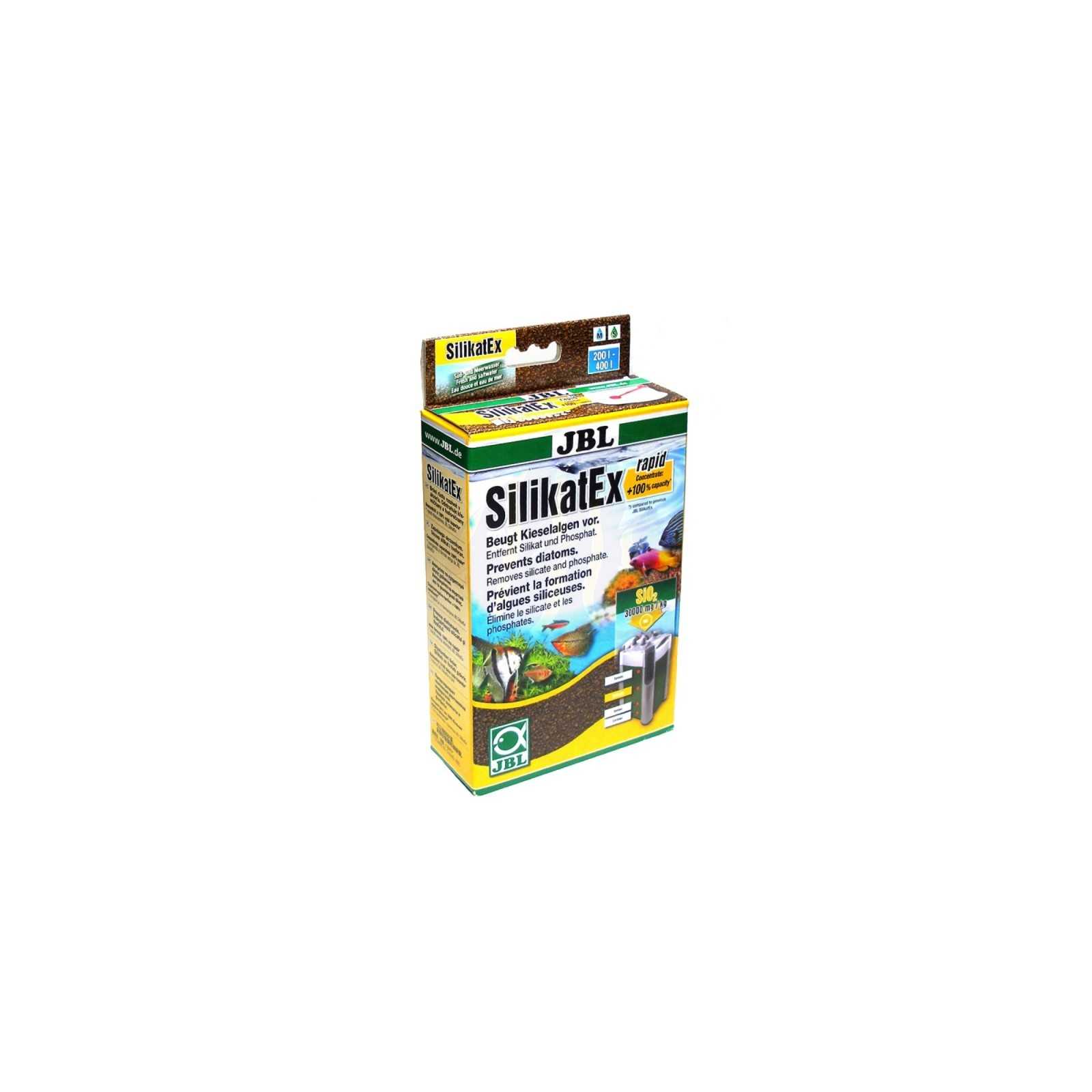
Silikatex removes silicates from freshwater and marine water aquariums, depriving the unwanted diatoms (brunette plates), which often appear after adding fresh water, their food resources. Among other things, Silikatex also removes phosphates, thus controlling the growth of other algae. The filter material creates living conditions as in a biotope.
Filter material for removing silicic acid (silicate) from fresh and marine water, which leads to diathyhead formation
Rinse, pour into the attached reticella and place in the filter. Rinse after one or two weeks
Diatoms can form ugly brown plaques on gravel, decoration and plants
With the JBL Silikat Test examines the content of silicates. Values less than 0.4 mg / l of silicates prevent the formation of diatoms.
Guaranteed efficiency: alloy up to 30,000 mg of silicate (SiO2) / kg. Reticella and closing clip included
400gr of product treat up to 200-400 liters