Reverse osmosis is a technology that exploits the capacity of certain semi-permeable membranes to separate water from substances dissolved. Applying a certain pressure (that water network), the water is strengthened to cross the membrane; Pure water (permeated) will be thus divided by water containing salts (concentrate) The osmotic membrane that implements the most prompted level that is achievable (that of polyamide / polisulfone), behaves like a barrier towards not only of salts and inorganic substances, but also towards organic substances of molecular weight greater than 100; It is therefore an excellent defense against micro-increases, pesticides, pyrogens, viruses and bacteria that were contained in water. This technology appeared on the water treatment market in recent times, it came to rapidly stating, and, in a few years, it is imposed thanks to its characteristics of versatility, excellence of performance and ease of use.
• The membranes were tested at 25 °, 4.8 bar, 2000 ppm as TDS. • Due to the different operating conditions, compared to those ideal in which they were verified, real production is about half of the theoretical one.
Technical data Osmotic water - residual water The appliances were set to the ideal and experienced ratio of 1 to 4. Operating pressure 3 - 8 bar Temperature 1 - 30 degrees Celsius Quality membrane TFM Polyamide - Polisolfone Salt retention rate 98% - 99% Output water values 10 - 40 microsiemens
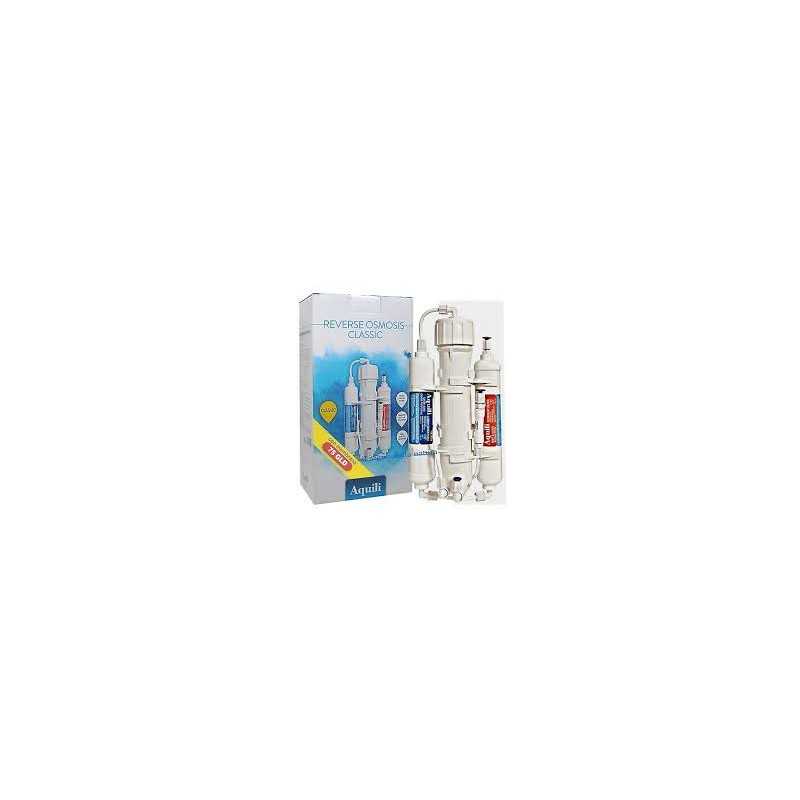
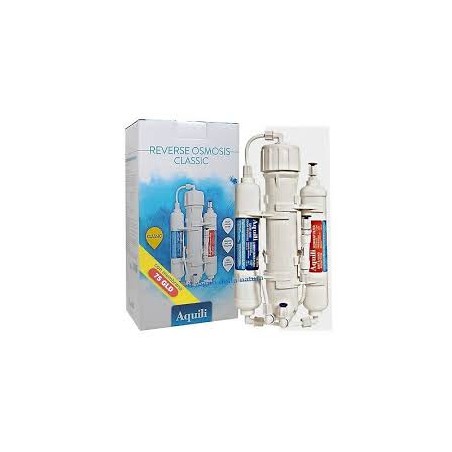
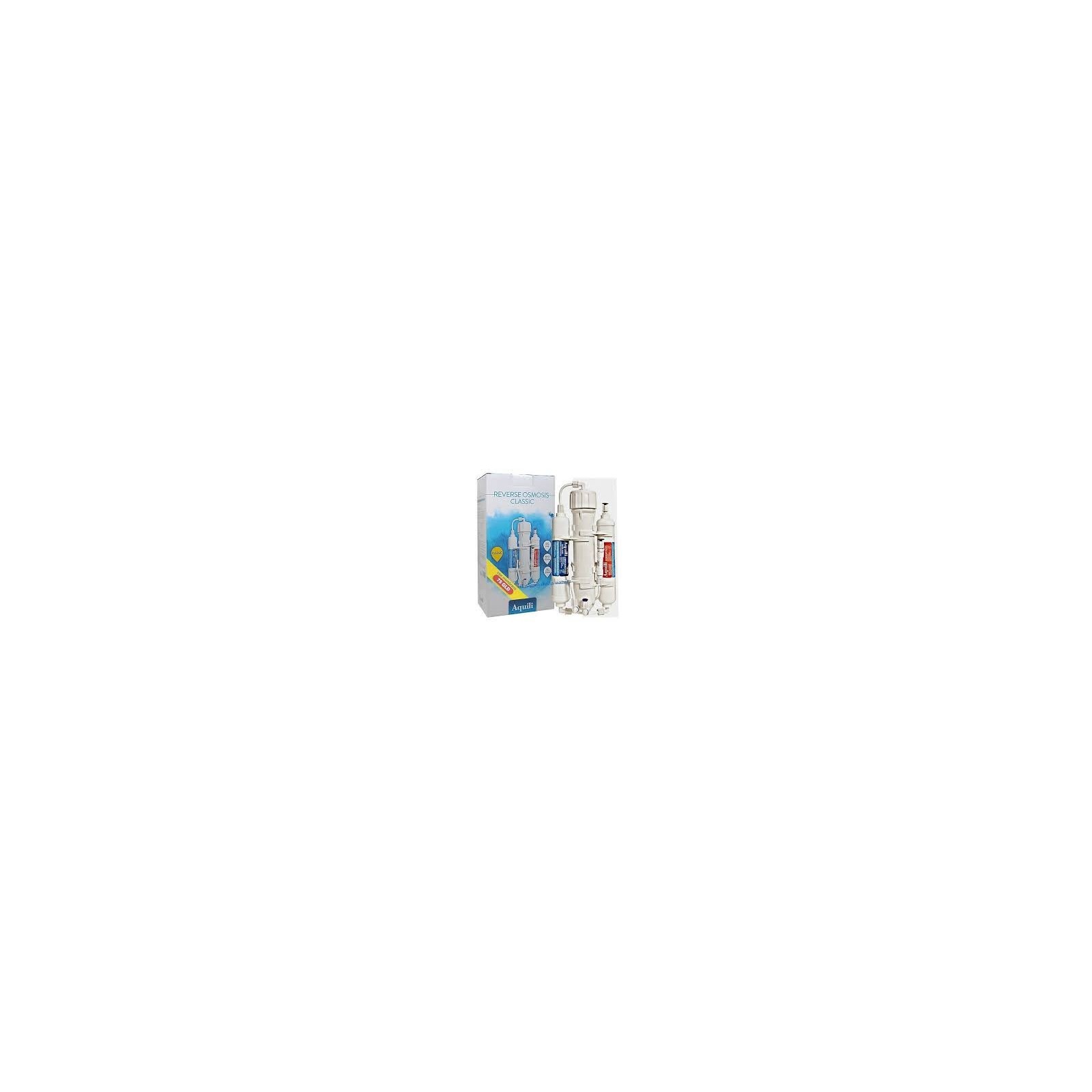
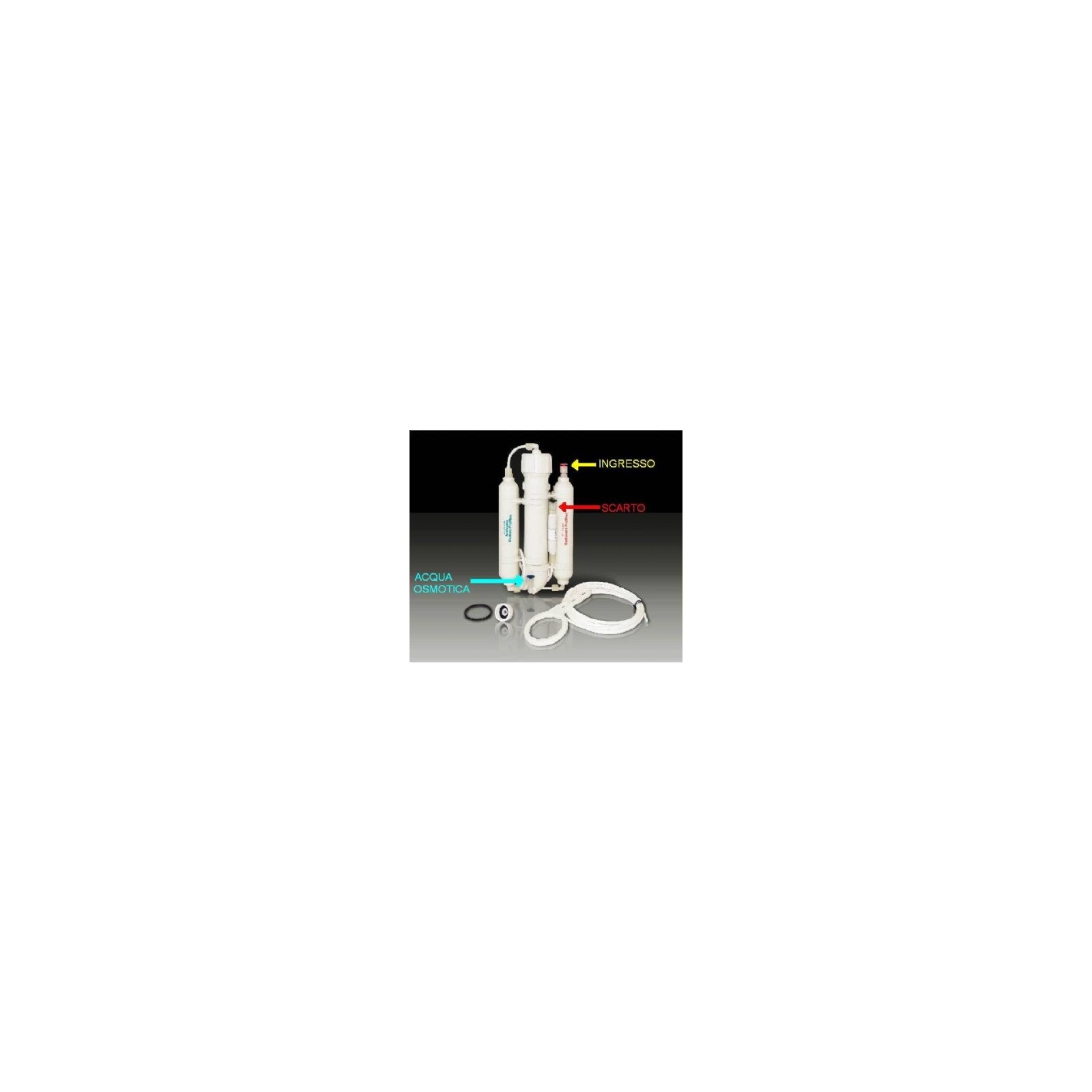
RO Classic
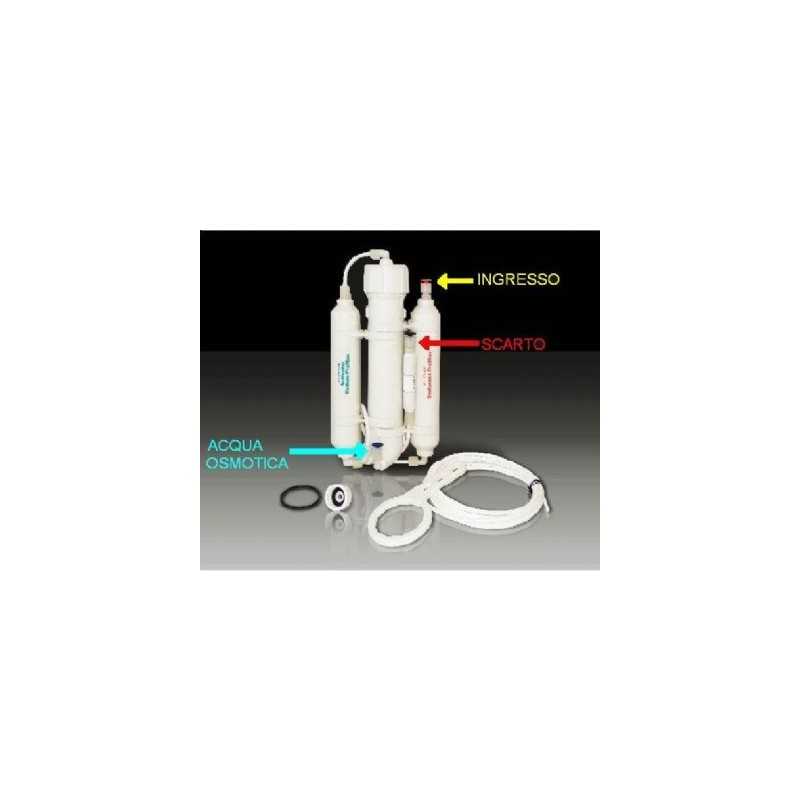
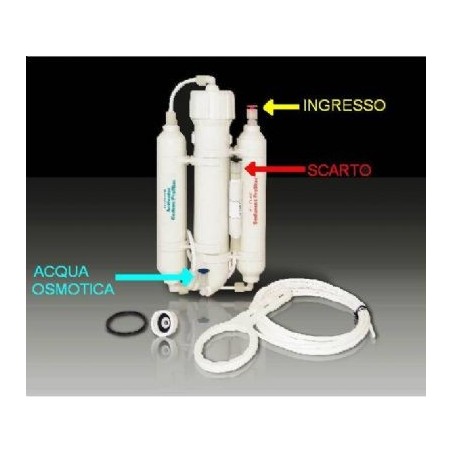
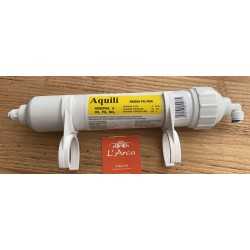
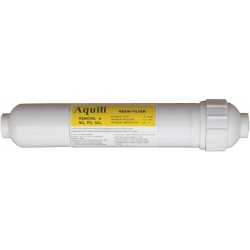
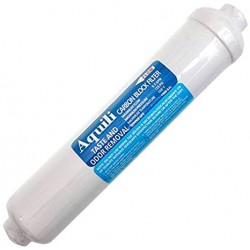
Composed of:
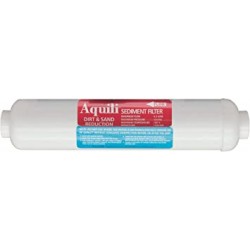
5 micron sediment cartridge
Active carbon cartridge treated with specific acids for water purification
Osmotic membrane with a range of 50 gallons per day (1 gallon = 3.785 liters)