Your cart
There are no more items in your cart




Available in stock
Available in stock

This product is available for subscription. To subscribe this product, please select the subscribe button and select subscription options.
You will save maximum €0.36 amount on this product if you subscribe to this.
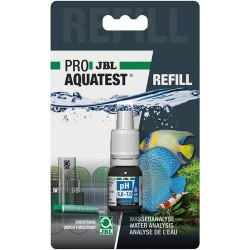
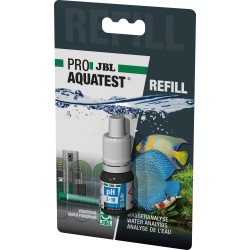
PH test 3.0-10.0 REFIL PROAQto
JBL Proaqua test pH 3.0-10.0 It is a water test for the optimal pH value analysis in freshwater and sea aquariums.
You might also like

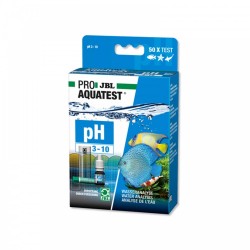
JBL ProAquatest pH 3-10
Maintaining an adequate value of the constant pH is essential to maintain the well-being of all aquatic organisms. In particular, sudden oscillations are to be avoided. In addition many dissolved substances in water are subjected to pH changes. For example, the amount of CO2 to be dissolved in water is directly proportional to the pH value. The pH value can therefore serve as a simple control variable to adjust the fertilization systems with CO2, provided that there are no other acids that influence the pH value in water (eg humic acids). The optimal CO2 concentration for plants and harmless for fish is reached at a pH value of about 6.8-7.3. Carbonate hardness must not be less than 4 ° DH. Here is also used JBL ProAquatest pH 6.0-7.6. The optimal pH value for most fish and freshwater plants is around 7.
However, there are also freshwater fish that require slightly acid or alkaline water. For particularly precise measurements of the pH value, there is the JBL ProAquatest pH 6.0-7.6 (also for the control of the fertilization with CO2) for freshwater aquariums, adapted to the relevant pH ranges, and the JBL ProAquatest pH 7.4-9.0 For sea water watering and lasks. For marine organisms, the pH values to be considered optimal are around 8.2. Especially in marine aquariums with invertebrates, the consumption of calcium bicarbonate can reduce the value of pH (and carbonate hardness). When taking care of fish from slightly alkaline fresh waters, eg. Lake Malawi or Lake Tanganica, pH values are recommended around 8-8.5. For KOI carps and other fish, the optimal pH values are between 7.5-8.5. In the garden pond, but above all in aquariums, in the event of CO2 deficiency, algae in particular can consume hydrogenocarbonate present in water through their rapid assimilation during photosynthesis (biogenic decalcification) and therefore bring the value of pH at levels such as they are dangerous for fish (over 10).
You might also like