Your cart
There are no more items in your cart

Available in stock

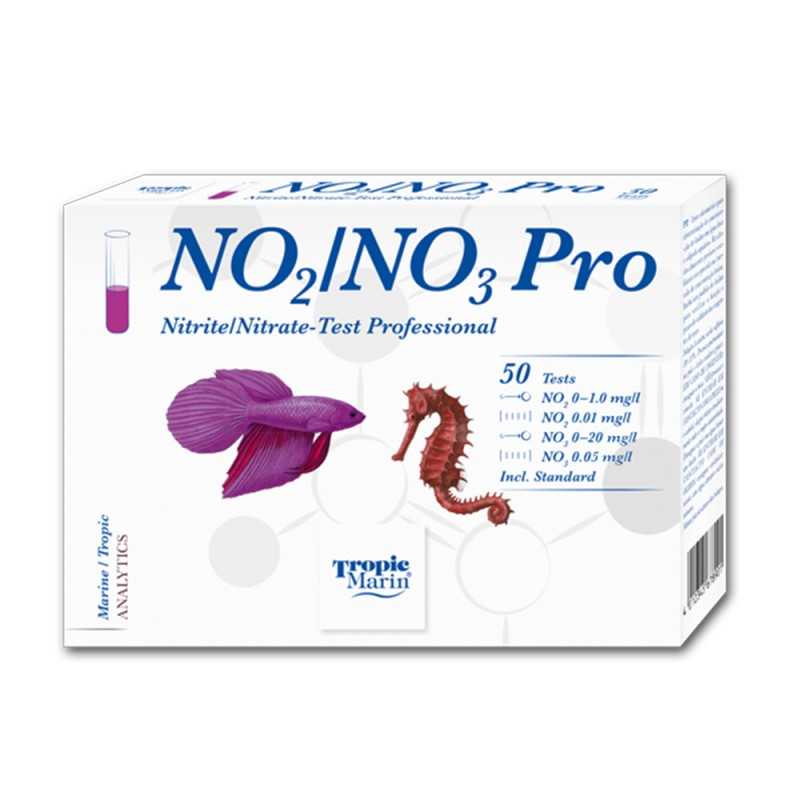
Tropic Marin NO2 / NO3 Pro Sea Test / FreshWater 50 Measurements
For high precision determination of the concentration of nitrites and nitrates
Nitrate ions (NO3-) are formed by ammonium (NH4 +) as a final product of the nitrification process. Nitrite (NO2-), which is highly toxic in particular for freshwater species, is produced in the first phase of the bacterial process. If the nitrification process works, the nitrite is converted to relatively non-toxic nitrate in the second phase. Increased levels of nitrites greater than 0.05 mg / l (ppm) are usually found in tanks during maturation or in tanks with nitrate filters.
Nitrates affect water quality in the aquarium: higher concentrations of nitrates in marine aquariums will end up inhibiting the growth of delicate corals. An algal flowering is often the result of a high level of nitrates in an aquarium. Some barrier aquariums have extremely low nutritional conditions: in cases like these can occur nitrate deficiencies. Therefore, the concentration of nitrates in the aquarium water should be tested regularly. It is advisable to maintain the concentration of nitrates in freshwater aquariums below 50 mg / l (ppm), while the concentration must not exceed 20 mg / l (ppm) in salty water applications. When cultivating hard coral, the goal is to maintain the concentration of nitrates below 10 mg / l (ppm). The lower limits for nitrates depend on the general conditions of the aquarium.
With the Tropic Marin® High Resolution Nitrate / Nitrate-Test Professional It is possible to determine the concentrations of nitrites and nitrates with a particularly high accuracy in the low concentration range between 0 and 1 ppm for nitrites and between 0 and 20 PPM for nitrates.