Your cart
There are no more items in your cart




Available in stock

Features and properties
For freshwater and marine
Nitrite measure: 0-2.0 mg / l
Nitrate measurement: 0.5-50.0 mg / l
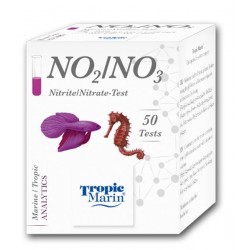
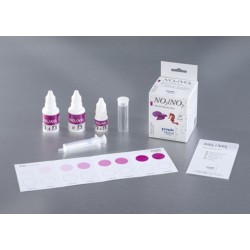
NO2 / NO3 test It is designed to control the level of nitrites / nitrates in salted water and freshwater aquariums. Everything you need is included in the supply. Once sold out, the reagents can be purchased in the charging package.
The nitrogen cycle, nitrites and nitrates
In the nitrogen cycle and during the nitrification process, the clean bacteria break down the waste (for example death plants or fish droppings) mineralize them and make them harmless. In the process, the bacteria convert ammonia and ammonium in nitrite. In the further course of the nitrification process, the nitrite is oxidized in non-toxic nitrate. The plants absorb the nitrates and the cycle starts again. In aquariums, nitrite concentrations and nitrates must be controlled regularly. High concentrations of nitrates can interrupt the growth of corals or lead to greater growth in algae. On the other hand, low concentrations cause shortcomings and have a negative effect on the inhabitants of the aquarium.
Nitrite values must be kept low in all aquariums: the optimal value is less than 0.2 mg / l. While the level of nitrates in freshwater aquariums should be less than 50 mg / l, a value greater than 20 mg / l is not suitable for sea water aquariums. In aquariums with corals, the value of the nitrates should be less than 10 mg / l.
Instructions for Use: As nitrite concentrations could affect nitrate measurement, both must be measured before measuring nitrates and, if necessary, nitrate values must be corrected.
Nitrite measurement
Shake the dropper bottle vigorously before use.
Rinse the glass cuvette first with tap water and then with the aquarium water.
Fill the glass cuvette with 5 ml of aquarium water, using the dosing syringe.
Add 5 drops of reagent A in the glass cuvette, close with a cap and gently shake the solution.
Add 2 drops of reagent C to the solution, close with a cap and shake gently.
After 3 minutes of reaction time, place the glass cuvette on the white circles of the nitrite colors samples and compare with the opposite colored areas. To this end, look from top to the open cuvette. Move the sample to the color samples until the cuvette and the overlying colored area do not have the same color. If the colors do not coincide perfectly it is necessary to opt for an intermediate value.
Read the nitrite value measured by the color field.
After measuring the value of the nitrites, thoroughly rinse the glass cuvette and the syringe with tap water.
Nitrate measurement
Shake the dropper bottle vigorously before use.
Rinse the glass cuvette first with tap water and then with the aquarium water.
Fill the glass cuvette with 5 ml of aquarium water, using the dosing syringe.
Add 10 drops of reagent A in the glass cuvette, close with a cap and gently shake the solution.
It vigorously shake the bottle containing the reagent B in a horizontal position for 30 seconds. Add 10 drops of reagent B in the glass cuvette, close with a cap and shake the solution. After shaking, set aside.
After 3 minutes, add 4 C reagent drops to the solution, close with a cap and gently shake the solution.
After another 3 minutes of reaction time open the cuvette for analysis and place it on the white circles of the nitrate colors samples and compare with the opposite colored areas. To this end, look from top to the open cuvette. Move the sample to the color samples until the cuvette and the overlying colored area do not have the same color. If the colors do not coincide perfectly it is necessary to opt for an intermediate value.
Read the nitrate value measured by the color area. If necessary, the measured value should be corrected.
After measuring the value of the nitrates, thoroughly rinse the glass cuvette and the syringe with tap water.
Content:
20 ml of reagent a
20 ml of reagent b
10 ml of reagent C
1 10 ml glass cuvette
1 5 ml dosing syringe
1 color samples
1 instruction manual
Our expert Fabio Zin recommends: The concentrations of nitrites and nitrates in aquariums must be checked regularly and adjust if necessary! High concentrations of nitrates can interrupt the growth of corals or lead to greater growth in algae. However, too low concentrations can cause deficiencies.