It is originally from South America precisely in Brazil where it is present in the Rio Araguaia river river.
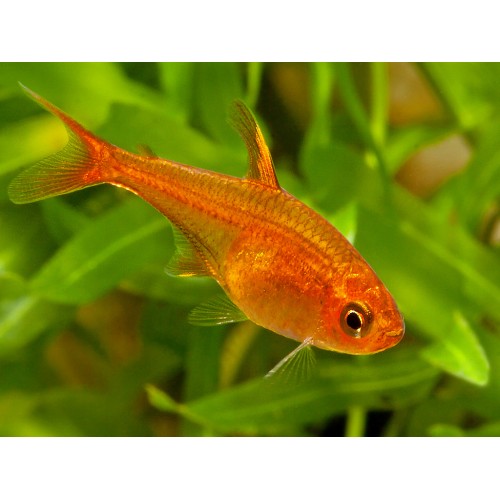
The most common names with which it is known are: Hemigrammus Amadae, Hyphessobrycon Nano, Amanda, Nana Rossa, Tetra of fire,Tetra Red Dwarf and Ember Tetra Due to its small size. In fact, its maximum size does not exceed 2.5 cm. The coloring varies from bright red intense to pale orange and some specimens are yellow. The thing that amazes is in the fact that these fish live in herds of the same color by forming well-distinguished colonies.
Their beautiful coloring will be more evident as well as good reproduction and longevity results. In fact the Hyphessobrycon Amandae lives from 3 to 5 years.
Characteristics of the Hyphessobrycon Amandae
The aquarium must have a minimum dimensions of at least 50x45x45 cm, abounded in the width because the Tetra Nano needs a lot of space for swimming. If possible avoid community aquariums with larger or aggressive fish, they are small and shy so easy prey.
The body has a compressed rhomboid shape sideways, coloring becomes very intense. Especially in adult males, during the reproduction period. Males will constantly confront themselves for the control of females, but in a very harmless manner. This is the reason that contributes to accentuating the coloring in tone and from this will evince the dominant male that will be of a more intense color of all others.
If you look back backlight you can see a certain transparency, the first rays of the dorsal and anal fins are palliously. In the caudal fins the color is in the upper and lower part. The females are normally more round and stouzzates.
It is a very quiet little fish but as mentioned fails to compete with larger and noisy bathmates for this reason we recommend an aquarium with peaceful fish, of the same species, of the same size or smaller.
We recommend as a bathmates, dwarf cichlids, locarids, caracids of similar dimensions, callittidi, fish accept apistogram.
Bathtub set up
To set up the ideal aquarium you started with a pool of at least 60 liters, developed in width. The Ember Tetra It is originally from a biotope from black waters so a filtering with peat will give a amber coloring to water and will help maintain the ideal values for the survival of this fish.
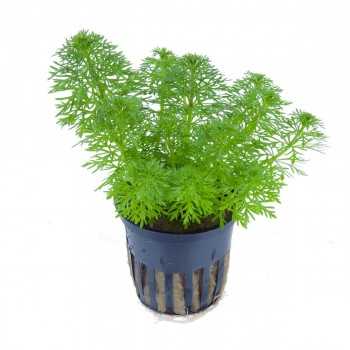
The different dark color layer, dried branches, logs, an abundance of dwarf plants on the sides and floating plants in a backdrop, leaving the front and central part for swimming in pack, a litter of leaves in particular will help The formation of microbial colonies handed to decompose. A colony of microorganisms can provide a source of secondary food for breeding of fry. In addition the release of tannins and chemicals that will help to maintain the right values of the tank, soft and sour water and will benefit especially to the health of our fish.
Good biological or sponge filtration and a delicate water movement will be sufficient. Avoid lighting up the aquarium too much, I Tetra Nano comes from dark waters, so little illuminated and poorly tolerate intense and direct lights, indeed you may find yourself with stressed fish, the floating and long stem plants are ideal for filtering direct light.
Habitat of Hyphessobrycon Amandae
Originally from Brazil Hydrological Basin of Rio Araguaia, Rio Das Mortes, Braco Major, Isla do Bananal, Mato Grosso and Rio Tocantins. Live in small tributaries, ponds and lakes rather than main river channels. All these waters are acidic and soft, typically tropical, often covered with large layers of decomposition foliage fallen by branches and trees on the banks.
Lighting and temperatures
As already mentioned they do not love intense and direct light so it is usually crying the tank abundantly with floating or long stem plants. Temperatures are typically tropical therefore vary from 24 ° to 28-30 °, the pH oscillates between 5.0 and 7.0 water hardness varies between 3rd and 10th DGH.
Power
Omnivorous species accepts all kinds of dry, frozen, frozen food, freeze-dried food, micro flakes, micro granules, alive, pellets, the important one that are small to adapt them to their mouths, change the diet daily with prevalence of live food, Frozen, frozen or otherwise colors will become less turned and will have difficulty reproducing. Naupli di Artemia, Moina, GRINDAL, DAFNIE, Chiromonus are shown. They are very slow fish fish, take care to check that they feed. Sometimes it can happen that if the food reaches the bottom of the tank their interest in that food tends to figure out and try to make it resurface to be able to consume it at half a bath.
Reproduction of Hyphessobrycon Amandae
H. Amandae is an oviparous species, of medium reproductive difficulty, which does not care about eggs and fry. In a community aquarium, if the values are ideal you can have spontaneous reproduction, without any human intervention, and you will notice reproduction only when the small fry will appear. A limited number certainly, since the Ember Tetra It feedback of its own eggs, so only those survivors will open.
They do not form couples for life but will be reproduced with occasional couplings, you will find the formation of a couple when a more colorful male and a female swollen will start swimming side by side. First quickly and then slowly, from there will happen to the real reproductive act.
Reproduction in Nursery
If you want a good reproduction you have to set up a playback tank or nursery of at least 10 liters for a couple. Of synthetic wool held on the bottom from a net that passes the eggs but does not give way to parents to predate them, they can also go well glass marbles, java mosses, dubyana vesicularia, ferns like microsorum pteropus, scattered on the bottom, as well as floating plants for minimal lighting.
Reproduction takes place especially at night or to the first hours of the day, then in the twilight. We recommend a slight filtration in peat, a small filter well protected to avoid the suction of the eggs.
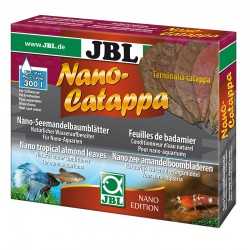
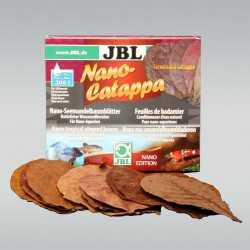
The water will have to be softer and softer than the one contained in the large tank, you can use peat in granules (at the beginning it will tend to float but afterwards it will be deposited on the bottom) and dried ketapang leaves.
The ideal values are pH between 5-6, water hardness 0, temperature between 27 ° and 29 °. Let the reproduction aquarium mature for at least a week after you insert the couple preferably late in the evening, increasing the feeding of live, frozen and frozen food that encourages the reproductive instinct and leave it for 2-3 days. If you do not write eggs within this period inside the tray changed the pair of players.
Deposition and hatching eggs
After the courtship, made of delivering fast trackings and lenses of the two fish side by side, as mentioned above, the pair will take place in the twilight. The couple will expel eggs and sperm simultaneously in several phases. About 50-70 eggs, often between vegetation.
When the female returns to its normal dimensions, remove both the torque and the protective network from the Nursery, inserted a small porous stone connected to a small area for good oxygenation, to be kept constantly turned on to avoid the mushroom of the eggs.
The hatch will take place after about 30 hours from the deposition and for at least 3 days the fry should not be fed because they will feed the calm bag. The microfauna inside the tank will help growth but it will not be enough, so past this short period you can start feeding them with infused food such as rotelifers, paramecals or very small dry feed, about 5-50 micron.
After a week you add to the Naupli Artemia and Microworn diet, often and in small quantities to avoid water pollution.
When the fry will seem great enough and strong you can start travasing the water of the large tub in the Nursery. Progressively, so as to adjust the values of the Nursery to those of the tank where you will transfer the fry.